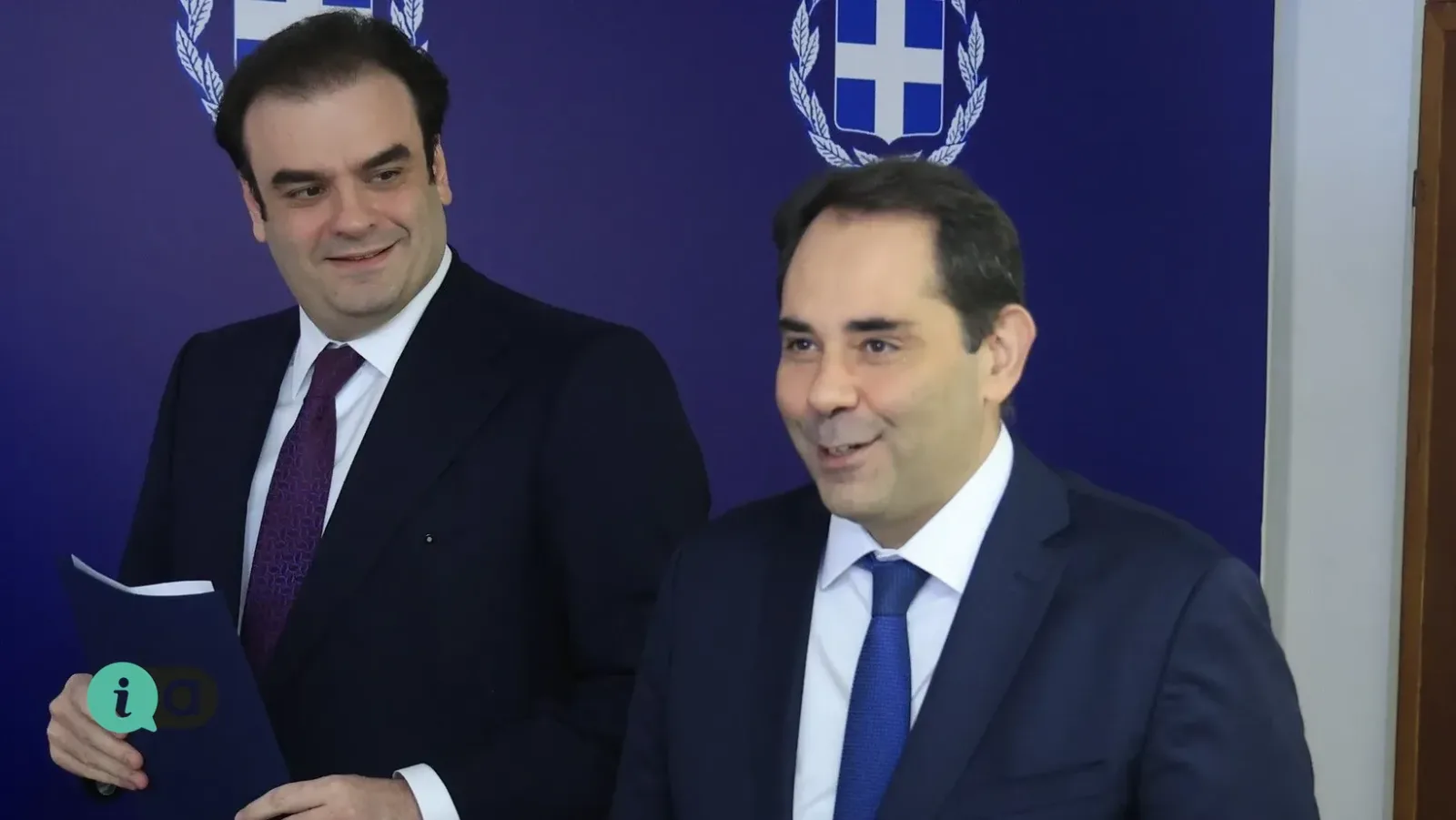
The Minister for National Economy and Finance, Kyriakos Pierrakakis, and the Deputy Minister, Thanos Petralias, tabled the draft 2027 state budget on Monday 5 October before the Standing Committee on Financial Affairs of the the draft 2027 national budget. The final draft will be tabled in November and voted on in December. ‘The challenges of 2027 are many and significant,’ the two ministers write in the accompanying letter, citing geopolitical uncertainty, energy and trade tensions.
Key figures
Growth is forecast at 2 per cent for 2026 and 2.3 per cent for 2027, compared with 0.9 per cent and 1.2 per cent for the eurozone. GDP at current prices rises from €262 billion to €274.6 billion. Inflation is set to fall from 3.8 per cent this year to 2.6 per cent in 2027, whilst unemployment is expected to fall from 8.4 per cent to 7.9 per cent. Average earnings per employee are set to rise by 3.9 per cent in nominal terms, which is 1.4 per cent above the rate of inflation.
The main driver is investment, up 7.9 per cent in 2027, reaching 18.6 per cent of GDP. Private consumption is set to rise by 1.5 per cent, exports by 3.1 per cent, imports by 4 per cent and tourism receipts by 5.9 per cent.
In terms of public finances, the general government primary surplus is estimated at €9.15 billion, or 3.3 per cent of GDP, down from 3.6 per cent in 2026. The overall balance remains in surplus, at 0.3 per cent of GDP. Debt falls from 136.7 per cent to 128.8 per cent of GDP (€353.7 billion), with early repayments of €12.8 billion in 2026. State budget expenditure is reduced from €87.97 billion to €85.05 billion, mainly because projects under the Recovery Fund are being completed.
Where does the revenue come from?
Tax revenue is forecast at 77.88 billion euros, 2.15 billion (2.8 per cent) higher than this year. Almost all of this increase comes from income tax: €29.38 billion, +7.5 per cent, of which an additional €620 million comes from individuals (due to wage increases, the minimum wage and a fall in unemployment) and an additional €1.3 billion from businesses. VAT remains at €30.58 billion (−€196 million), having exceeded the target by €1.55 billion this year, together with an extraordinary €306 million from the Egnatia motorway concession. The ENFIA property tax is reduced to 2.37 billion euros, as the exemption for a primary residence is extended to settlements with up to 2,000 inhabitants (2,200 in Western Macedonia). The business tax continues to be phased out.
The €2.2 billion measures
The draft bill incorporates the measures set out in the State Budget, with a fiscal cost of approximately 2.2 billion euros in 2027:
- The minimum wage will rise from 920 to 960 euros in April 2027 and to 1,000 euros in January 2028.
- A reduction in social security contributions for private-sector workers by 0.5 percentage points from April.
- An annual pensioner’s allowance of €400 net in November, starting this year, for all those aged 65 and over.
- A Christmas bonus of €500 gross for civil servants from December 2027.
- The ‘My Home III’ housing programme, with a budget of €2 billion.
- Children’s investment account: the state will top up parents’ deposits by up to 1,200 euros a year.
- Loans and guarantees totalling €1.5 billion for small and medium-sized enterprises through the Development Bank, and a reserve of €200 million for energy costs.
- Advance tax payment for sole traders reduced from 55 per cent to 50 per cent for the 2027 tax year, a zero tax rate on income up to 20,000 euros for full-time farmers and families with three children, index-linked adjustments to disability benefits, and accelerated depreciation.
What does this mean in practice?
A private-sector employee will see slightly lower deductions in April and, if on the minimum wage, will receive 40 euros more in gross pay. A pensioner over the age of 65 will receive 400 euros as early as next month. Anyone with a main residence in a settlement with fewer than 2,000 inhabitants will no longer have to pay ENFIA on it. Self-employed people will pay a lower advance payment in 2028.
Source: Draft State Budget for 2027, Ministry of National Economy and Finance, tabled in Parliament on 5 October 2026; reports in Oikonomikos Tachydromos on 5 and 6 October 2026.