Unknown individuals posing as HEDNO employees are phoning elderly people in Artemida, telling them there is a ‘leak’ in their home and asking them to gather all their money and jewellery into a bag. The incident was brought to light on Friday 6 November by the daughter of an elderly woman, in a post asking everyone in Artemida and Spata to inform their parents and grandparents.
The same method lies behind the criminal ring that was dismantled by the Directorate for Combating Organised Crime (DAOE) on the afternoon of Thursday 5 November in Western Attica: six arrests, 24 cases of fraud and theft – either completed or attempted – and illicit gains totalling over 565,000 euros.
What happened at Artemida
According to the post, the elderly woman realised that something was wrong and hung up the phone. The unknown callers rang again. The family sent a friend to the house, who told the caller on the phone that she was the daughter and that the call was being recorded. The line was then immediately disconnected.
According to the post, the calls were made from the numbers 6995526004 and 6996526058. If you receive a call from either of these numbers, do not respond in any way and report it to the police. Scammers frequently change their numbers, so an unknown number does not necessarily mean the call is safe.
The same post also mentions a break-in the previous night, at around 03:30, at a premises on Karamanlis Avenue, where the perpetrators smashed the window. This is a separate incident.
How the gang that was arrested operated
According to the police, the organisation had been operating since at least July 2026, with ‘managers’, telephone operators who collected the money, and individuals who looked after the stolen goods. They selected victims at random from telephone directories and websites, pretending there was a power cut or a technical fault, and persuading people to leave money and valuables in a place that was easily accessible, either inside or outside their home. They frequently changed the telephone exchange and their numbers.
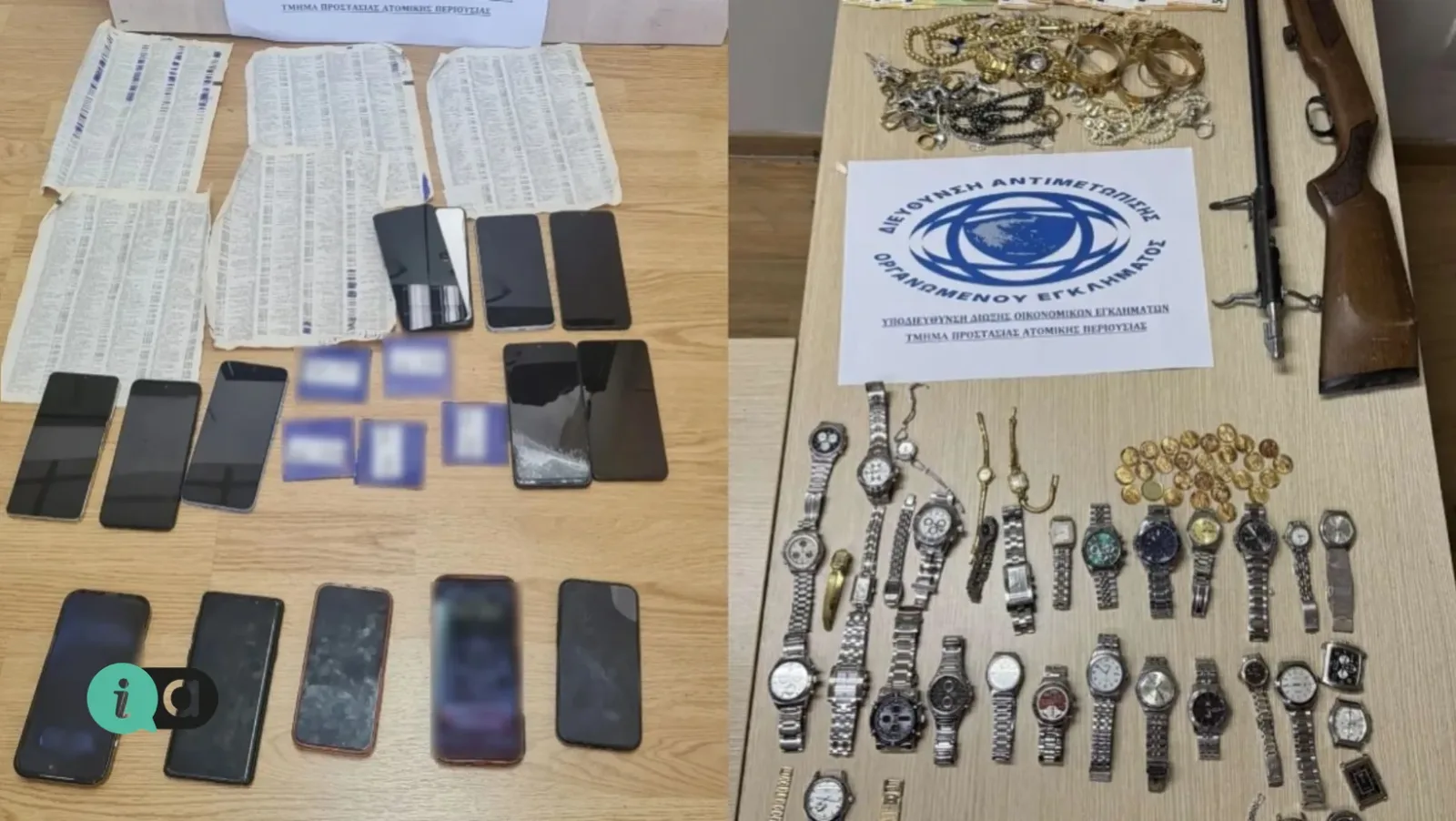
The searches uncovered, amongst other things, 4,100 euros, 12 mobile phones, 28 gold pounds, 63 watches, 60 bracelets and nine torn pages from a telephone directory containing names and addresses. It is not known whether the calls to Artemida are linked to the gang that was arrested. The fact that they took place after the arrests suggests that the scheme is still ongoing.
What should you do if you receive a phone call?
- HEDNO never asks for money, jewellery or a ‘collection of valuables’ in connection with any fault. A leak is not fixed by putting jewellery in a bag.
- Hang up the phone and do not open the door to anyone who comes to ‘collect’ anything.
- If you want to check on a fault, call HEDNO yourself on 11500, not the number from which you received the call.
- Contact the police immediately on 100, even if you haven’t handed anything over.
- Speak to elderly parents and neighbours. The phrase ‘this call is being recorded’ or ‘I’ll ask my daughter first’ is often enough to make them hang up.
A few days ago we wrote how to check a charity appeal before donating money. The principle is the same: before you donate anything, check through your own channels who is speaking to you.
Source: post by a resident of Artemida (via iRafina, 6 November 2026); Hellenic Police, DAOE (via Naftemporiki, 7 November 2026).