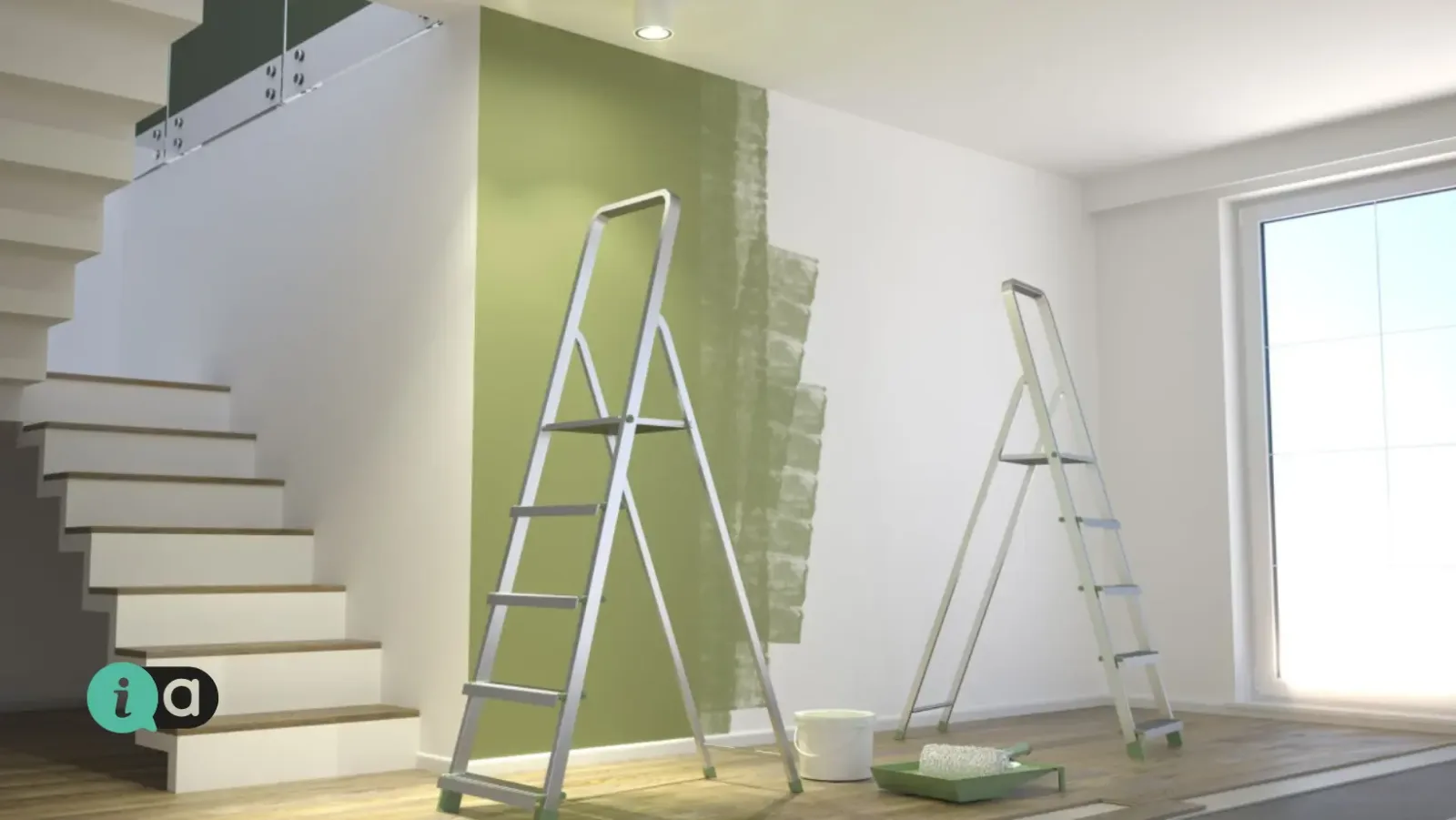
On Wednesday 30 September, the platform for eligibility certificates for ‘closed’ properties under the ‘Home Renovation’ scheme closes. The scheme subsidises the renovation of old homes with up to €36,000, and the subsidy rate is as high as 95 per cent.
In Artemida, where many houses were built decades ago as holiday homes, the question ‘Does my closed house count?’ is often heard. The answer for most holiday homes is probably no, because the scheme has a strict definition of what constitutes a ‘closed house’.
What counts as a ‘closed’ dwelling
A property is considered ‘unoccupied’ if it was not used at all in 2024 and 2025, and this is verified via the electricity bill. The property must either have had its electricity supply cut off following a request made before 1 January 2024, or have consumed less than 100 kilowatt-hours in total over the two-year period. Furthermore, section E2 of the 2025 tax return must be declared as ‘blank’ for all months.
100 kilowatt-hours over two years is very little. According to the decision itself, this corresponds to 2 per cent of the average annual consumption of a household. A standard fridge uses about one kilowatt-hour a day, so a holiday home that is open for one summer, with a fridge, a water heater and an air conditioner, will exceed the limit within a few weeks. Also excluded are any properties listed in the Short-Term Accommodation Register, i.e. those rented out via Airbnb and similar platforms.
The other requirements
- A building permit issued on or before 31 December 1990 and the property being in compliance with the law.
- Main living areas of up to 120 square metres, or up to 150 square metres for families with three or more children.
- Energy efficiency class C or lower.
- No energy-saving grants for the same property after 1 January 2020.
- The applicant must hold full ownership or at least a 50 per cent usufruct. Properties acquired in 2026 are not eligible.
There are two income brackets, based on income in 2025. For single people, the threshold is 18,000 euros in Category I and 25,000 in Category II. For a couple without children, the limits are 25,000 and 35,000; with two children, 35,000 and 45,000; and each additional child adds 5,000. Category I receives an 80 per cent subsidy and Category II 70 per cent. Three criteria each add 5 points: a mountainous or island area, which does not apply to Artemida; single-parent, three-child or large families; and a person with a disability, provided the owner themselves will be living in the property. The maximum rates are 95 per cent and 85 per cent. The maximum amount is 36,000 euros per property and 300 euros per square metre, including VAT.
What the owner is responsible for
The scheme does not subsidise holiday homes. Following renovation, the property must become a main residence, either for the owner or a tenant. For five years after the work is completed, the property must remain a residence and cannot be transferred; otherwise, the grant must be repaid. If the property is let, the rent must remain fixed for the first three years, whilst short-term lettings and subletting are prohibited.
How to apply
The eligibility certificate is issued via anakainisi.apps.gov.gr or via gov.gr (Property and taxation → Citizen grants), using your Taxisnet codes. This is the first step, not the final funding application. Anyone who fails to obtain it by Wednesday will miss out on the opportunity, unless a further extension is granted. Before you begin, check your electricity bills for 2024 and 2025 and your E2 form for 2025: if your consumption exceeds 100 kilowatt-hours or the property has not been declared vacant, the platform will reject the application.
Source: Joint Ministerial Decision No. 86272 EX 2026 (Government Gazette Series B No. 3058/02-06-2026), as amended by Joint Ministerial Decisions No. 116171 EX/15-07-2026 and No. 137219 EX/28-08-2026; Housing Policy Portal (stegasi.gov.gr), ‘Home Renovation’ scheme; announcement by the relevant ministries regarding the extension until 30 September 2026 (28 August 2026).