On Friday 18 September, the Municipal Committee of the Municipality of Spata–Artemida approved five resolutions (581 to 585/2026) correcting the water bills of around 50 consumers. In most cases, the problem was the same. For two or more four-month periods, the bill showed zero consumption, and then all the cubic metres were charged together in a single four-month period. The decisions were published on the Diaugia website on Monday 12 October.
What went wrong?
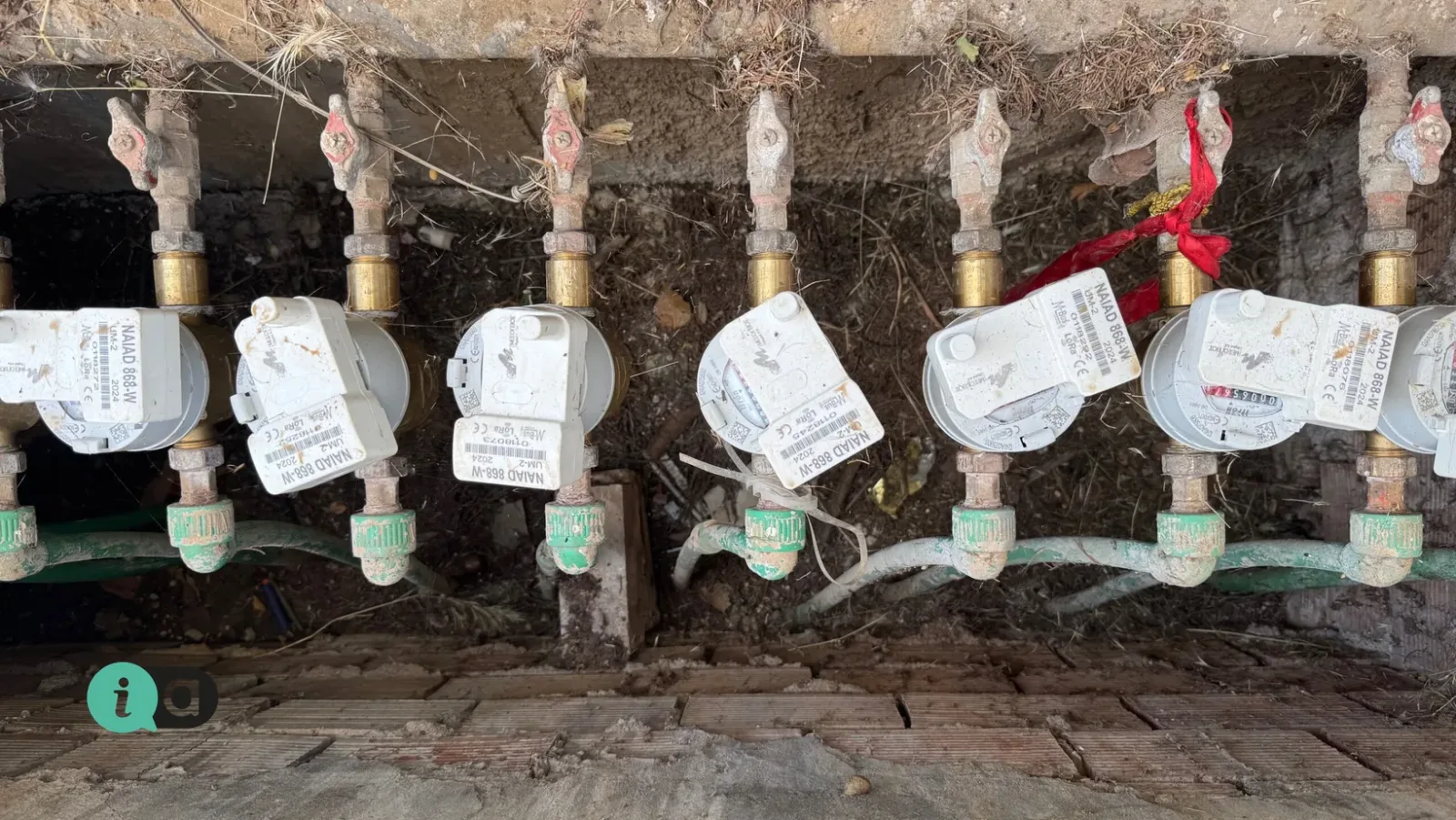
According to the department’s report, the error was discovered during a spot check. It is due to a ‘technical error’ during the transfer of data from the application that records water meter readings to the municipality’s financial management system. In one of its findings, the service identified five different issues with the connection between the two applications: incorrect transfer of readings, incorrect matching of water meters to their owners, transfer of invalid readings, readings that were not transferred at all, and incorrect entries leading to incorrect billing.
The errors are found in the accounts of the registers certified this year in January, April, June and July, covering four-month periods from 2024 to the first four months of 2026. In other cases, consumers were charged for a water meter that did not belong to them or paid the standing charge twice for the same four-month period.
Why does it cost more?
The same volume of gas costs more when billed in a single four-month period, because the price per cubic metre rises as consumption increases. An example from Decision 581: a consumer had a zero charge in the second and third four-month periods of 2025 and 92 cubic metres in the first four-month period of 2026, for which they were charged 84.03 euros. If spread over three four-month periods, the same cubic metres would cost €18.01 each, i.e. €54.03 in total. The average price per cubic metre falls from €0.91 to €0.59, saving the consumer €30. In the remaining cases, charges of between 100 and 195 euros per four-month period were reduced to between 13 and 51 euros per four-month period following the correction. All amounts are exclusive of VAT and standing charges.
Corrections are made only upon request
The utility company refers to this as ‘apportionment’. Unmetered consumption is divided equally amongst the four-month periods to which it relates. The large bill is partially written off and the remaining amounts are re-invoiced for the previous four-month periods. The proposal makes it clear that this is done ‘always at the request of the consumer concerned’. The applications examined in September had been submitted between the end of May and 21 August.
What to do: check your water bills for 2025 and 2026. If one or more four-month periods show zero consumption and this is followed by a bill that is much higher than usual, you can submit an application to the local council and request an equalisation, attaching the bills. Further information is available from the Water Supply Department on 22940 86666.
Sales: up to 80% off
The fifth decision (585/2026) concerns water leaks. The Municipality’s Water Supply Regulations (Decision 193/2015, Article 13) provide for a discount in three cases, always upon application. The first is a fault in the internal plumbing system that causes consumption to rise to more than four times the average of the last three years. The second is an underground, non-visible leak that causes consumption to rise to more than double the average. In both these cases, the leak must be identified by the local authority, and the discount amounts to 80 per cent for consumption exceeding the threshold. The third scenario concerns a consumer in financial hardship with an unusually high bill: they are charged the average rate and the entire difference is written off. In one of the cases in September, three bills of €134.81, €158.54 and €99.21 were reduced to €86.68, €90.48 and €80.99.
What the rulings don’t say
The decisions do not state whether the connection between the two applications has been rectified, nor how many accounts were affected in total. The audit that identified the problem was a random sample, and only those who submitted a claim are having their accounts rectified. Meanwhile, the municipality has put out a tender for a system that will read water meters remotely, at a cost of 803,520 euros for three years of operation.
Source: Municipality of Spata–Artemida, Municipal Committee Resolutions 581, 582, 583, 584 and 585/2026 (meeting of 18 September 2026), Diavgeia, 12 October 2026.